The brands quietly winning aren't doing both
I pulled engagement and cadence data on 8 operator-led brands this week. The pattern was unmissable. The brands with the strongest numbers picked Instagram and went deep. The ones splitting between Instagram and TikTok were burning out and underperforming both.
Every marketing newsletter, conference panel, and LinkedIn thought leader has been telling brands the same thing for two years. You need to be on TikTok. If you're not on TikTok, you're invisible to anyone under thirty. The algorithm is gold. The reach is unmatched. Go.
A lot of brands listened. Most of them are tired.
This week I pulled engagement rates and posting cadence on eight operator-led brands, then cross-checked each one's TikTok presence. I was looking for a pattern. The pattern showed up immediately, and it wasn't the one I expected.
The brands with the best numbers aren't doing both
They picked Instagram. They post more there. They post less or barely at all on TikTok. And their engagement is two to ten times better than brands trying to split the workload.
Three examples from the pull.
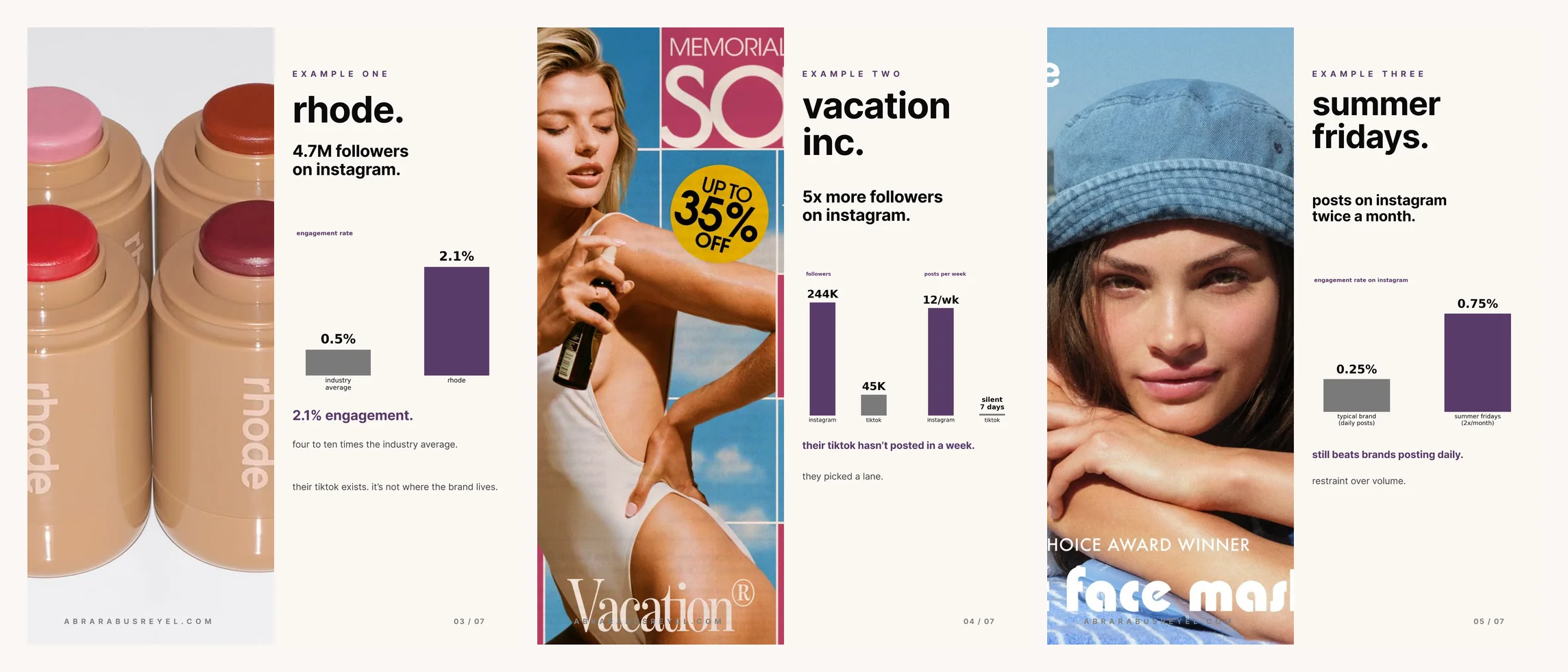
Rhode. 4.7 million Instagram followers. 2.1 percent engagement rate. Industry average for a brand account that size is 0.4 to 0.5 percent. Rhode is doing four to ten times better than the median. Their TikTok exists, it's even posting actively, but the Instagram numbers tell you which channel actually carries the brand.
Vacation Inc. 244K Instagram followers, 45K on TikTok. That's a five-to-one ratio. They post twelve times a week on Instagram. Their last TikTok was seven days ago. They've made a clear bet about where their audience is, and the numbers back it.
Summer Fridays. Posts to Instagram twice a month. Pulls 0.75 percent engagement. Brands posting daily are typically below 0.3 percent. They're winning on restraint, not volume. They publish when they have something worth publishing, and the algorithm seems to reward that.
Why splitting hurts more than it helps
TikTok's algorithm rewards novelty so aggressively that what worked last month is already stale. Hooks in the first two seconds. New angles every three. A bar that resets monthly. It is the format that built the platform, and it works for creators whose entire identity is the content output.
It does not work the same way for brands. A brand is a long-running argument about a single point of view. TikTok's format pulls that argument apart. Chasing trends shreds brand clarity faster than any wholesale rebrand.
Most of the brands trying to do both end up half-cooked on both. They post on TikTok because they feel they have to. They post on Instagram because that's where their actual customer scrolls. Neither channel gets the energy it needs to compound.
What "pick one" actually means
Pick the platform where your audience is already paying attention. For most operator-led, founder-fronted, taste-driven brands that's still Instagram. The aesthetic compounds. The grid is a portfolio. Comments turn into DMs turn into buyers. The algorithm rewards consistency more than it rewards trends.
If TikTok is your channel, go fully. Hire for it. Treat it as the main feed. Use Instagram as the secondary archive. But don't pretend the two demand the same energy. They don't.
The brands that look like they're winning quietly are not pulling off both. They are running one channel hard and treating the other as housekeeping.
The diagnosis
If your team is exhausted, your content feels scattered, and your numbers are mediocre on both channels, you are very likely paying the cost of splitting. The fix is not more output. It's narrower output.
Look at your last sixty posts. If you can't tell which channel is your A side and which is your B side, that is the problem. Pick. Reallocate. The metric that actually matters compounds when you give one channel everything.
If you want me to look at your last sixty posts and tell you which channel is actually carrying the brand, book a fifteen-minute call. I will tell you what I see either way.