The rate of going into debt is higher than the rate of surviving a business.
Twenty percent of new businesses fail in year one. Fifty by year five. Most founders are not just risking time. They are going into debt to do it. And the companies selling AI cannot make the math work either.

Starting a business looks great on a feed. The license. The storefront. The tagged partners. The press release if there is one. People send congratulations. They do not see the spreadsheet open in the next tab.
The math behind running a business is rarely what gets posted. Roughly twenty percent of new businesses close in their first year. By year five, half are gone. By year ten, only one in three is still operating. For VC-funded startups specifically, that failure rate climbs closer to ninety percent.
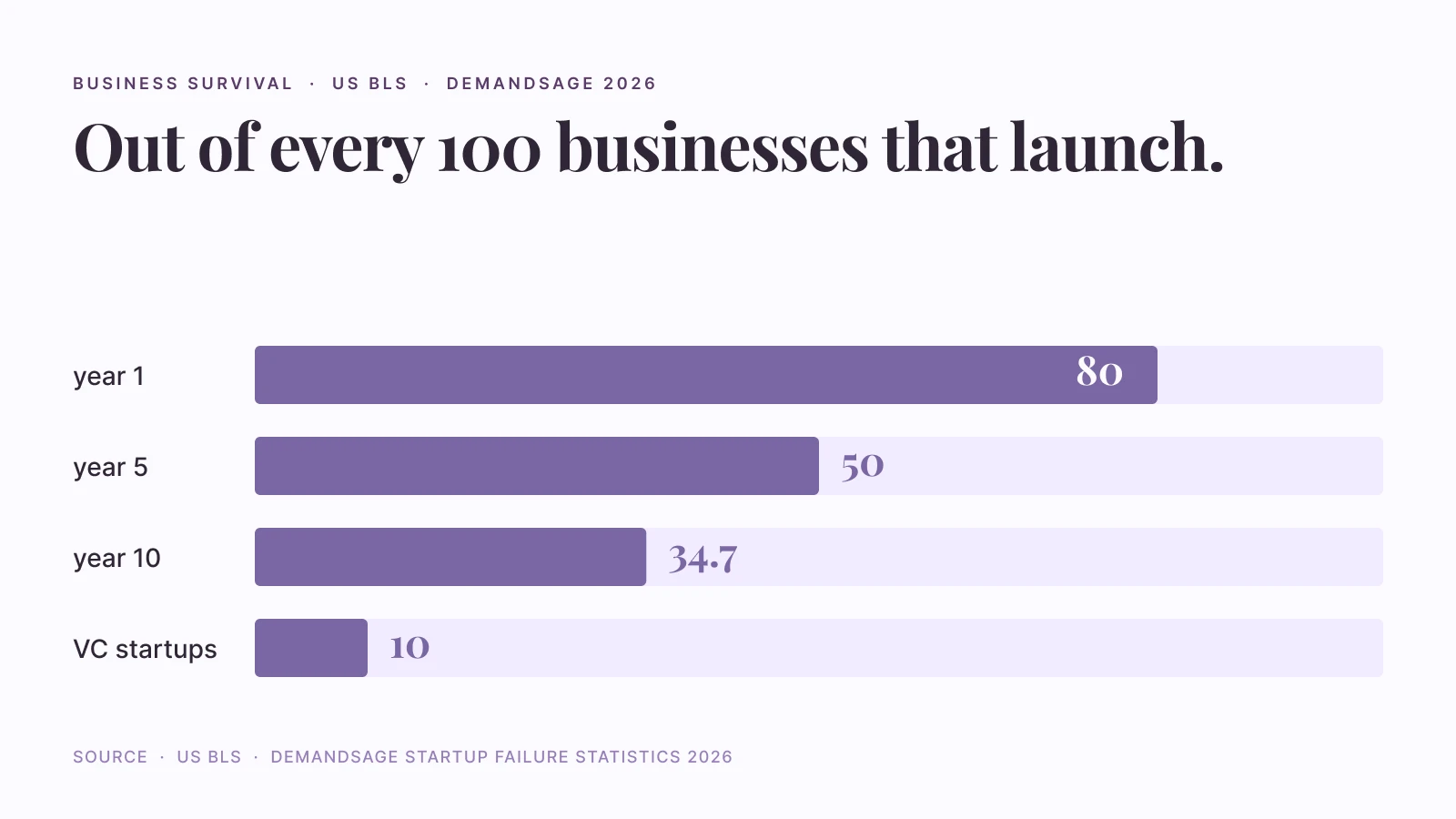
Eighty-two percent of those failures trace back to one thing. Cash flow. Not lack of demand. Not bad ideas. Not poor product. Running out of money before the business gets to scale.
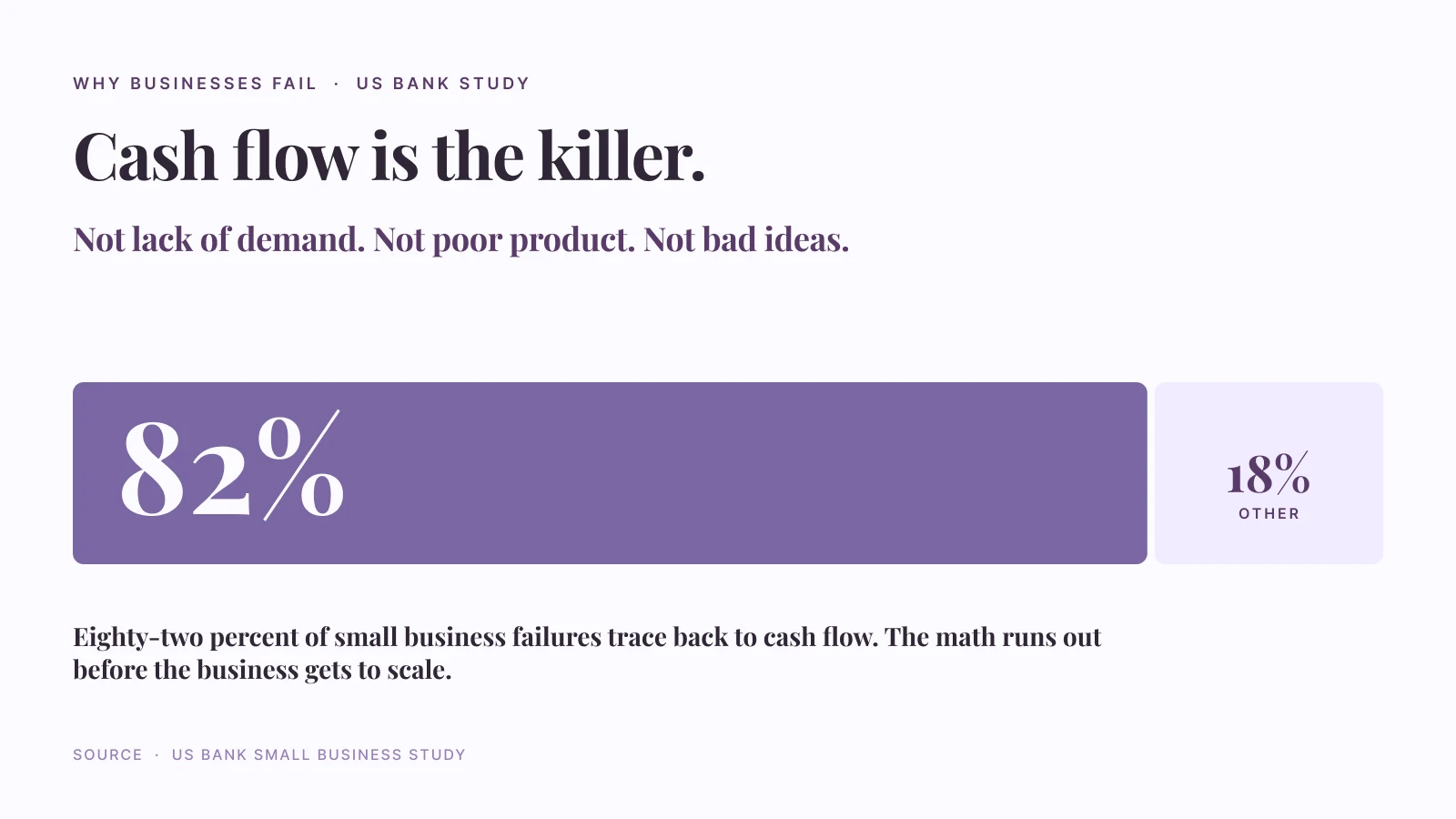
Seventy-five percent of new business financing comes from credit cards, business loans, and lines of credit. Most owners are not just risking time. They are going into debt to do it. The rate at which a founder takes on debt is higher than the rate at which they survive.

What nobody puts on the feed
People see the launch. They do not see the decisions.
Domain. Website. Location. License tier. Bank account. Lawyer. T&Cs. Waivers. Transport. Equipment. Partnerships. Influencers. Accounting. HR. Payroll. Renovations. Logistics. Admin fees. Insurance. Software stack. Tax compliance.
Each one is a fork in the road, and each one has a wrong answer that costs weeks. Stack them across a single quarter and the chaos compounds, regardless of whether the operator is a first-time founder, a second-time CEO, or a small team trying to scale into the next tier.
The owners who make it are not the ones who pick the right answer every time. They are the ones who can take thirty of those decisions in a week and still get out of bed.
The companies selling the dream cannot make the math work either
A lot of operators right now are trying to outrun the chaos with AI. They automate the marketing, the writing, the analysis, the customer service, the bookkeeping. They assume the tool will close the gap between where they are and where they need to be.
Uber burned its entire 2026 AI budget on Claude Code and Cursor in four months. Between December 2025 and April 2026. Monthly API costs per engineer ran between five hundred and two thousand dollars. Uber's CTO told the press they were back to the drawing board on AI budgeting.
Microsoft is spending one hundred and ninety billion dollars on AI capex this fiscal year against thirty-seven billion in AI revenue. The AI division spends roughly five times what it earns.
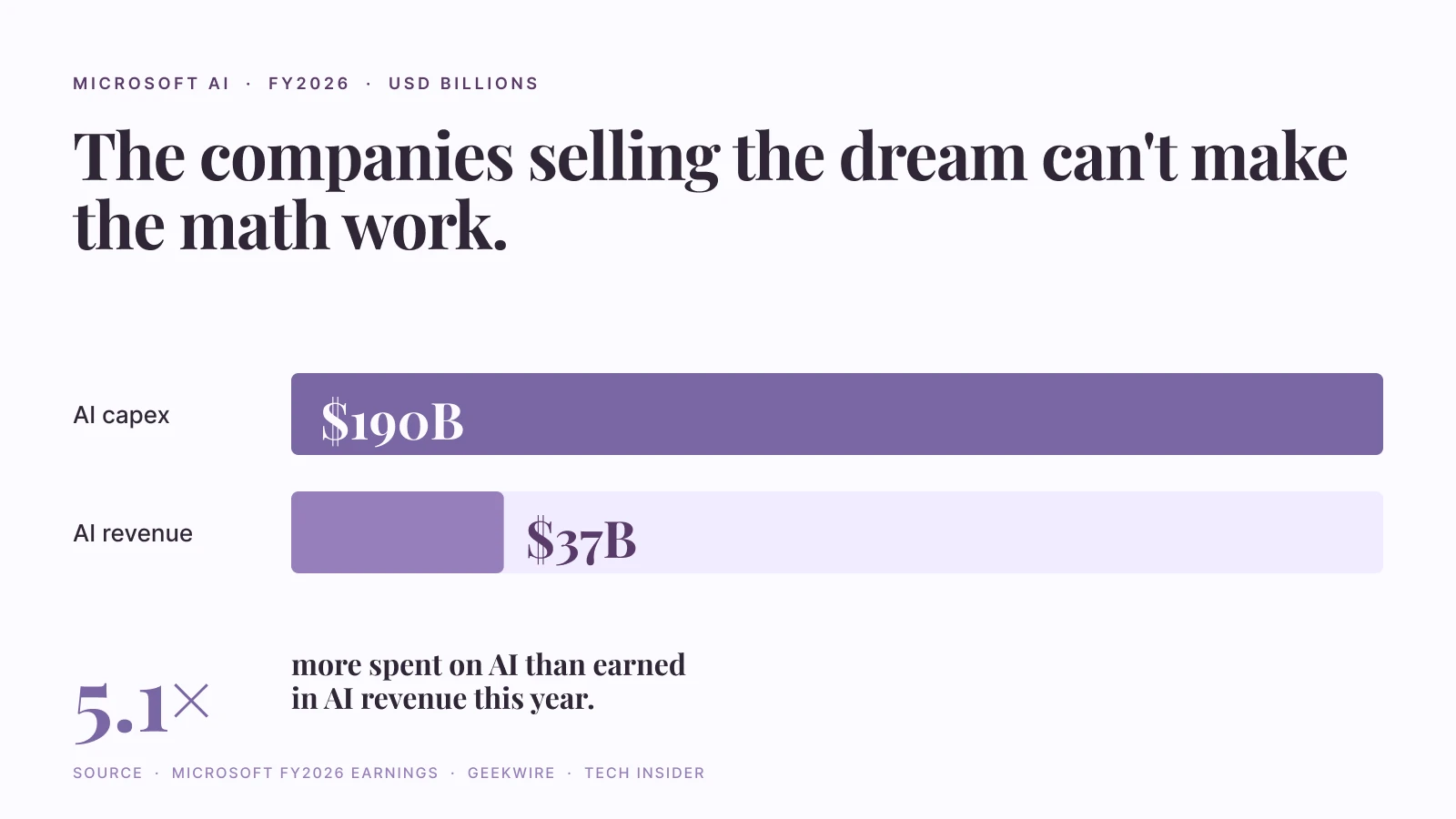
These are the companies selling the dream. They cannot make the math work. Their balance sheets absorb the cost in ways a small operator's cannot. AI is not a free productivity layer. It is an operating cost that compounds with usage. The more a business depends on it, the more overheads scale with activity. Without Azure-scale margins, that burn lands in one place.

What AI actually is
AI is a tool. It can draft an email. It can summarise a contract. It can give a starting point on research. It can pattern-match across sales data. It can support specific, bounded tasks.
It is not an accountant. It is not a lawyer. It is not a director. It is not a marketing manager. It is not a finance lead. When AI makes a mistake, and it will, the owner pays. If a contract clause it drafted misses a line that costs a client, AI does not write the apology. If a forecast it generated misses an obligation, AI does not pay the fine. Asking it to fix the mistake costs again. Usage scales with errors, not just outputs.
Running a business in year one is not about profit. It is about whether someone can sit with the pressure of deciding the license, the bank, the lawyer, the T&Cs, the payroll, the partnerships, the renovations, all in one week, without cracking. It is about killing the products and clients and ideas that are not working before they kill cash flow. It is about persevering through slow months when the spreadsheet says quit. It is about not asking AI for permission to make the call.
The operators who survive are the ones who can hold the chaos and still make decisions. AI can support that. It cannot carry it. Pretending otherwise is the most expensive mistake to make in year one.
If you are building something and the math is starting to bite, book a discovery call.